
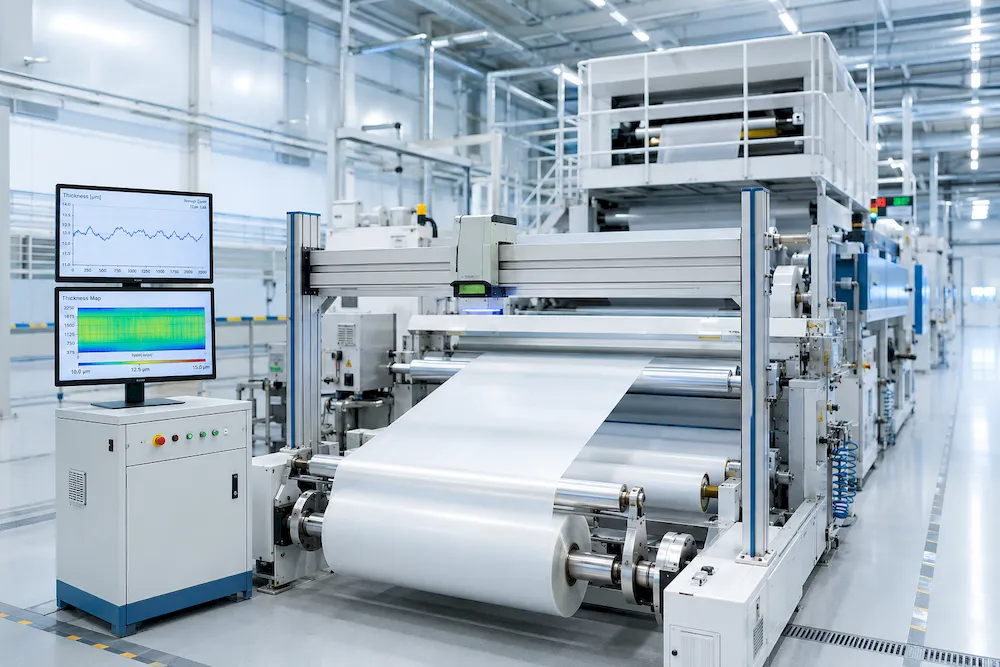
How In-line Measurement Systems Help Reduce Waste in Converting Lines
In converting lines, waste is one of the biggest problems for many factories. Materials such as film, paper, foil, nonwoven and laminated materials are often processed at high speed. If the thickness, width, coating amount or other key values are not stable, the factory may produce a large amount of defective material before the problem is found.
An in-line measurement system helps solve this problem. It measures important production data while the machine is running. The operator can see the data in real time and take action earlier. This helps reduce waste, improve quality and make production more stable.
This article explains how in-line measurement systems work and why they are useful for printing, packaging, coating, lamination, slitting and other roll-to-roll converting lines.
What Is an In-line Measurement System?
An in-line measurement system is a system installed directly on the production line. It measures the material during production, without stopping the machine.
The word “in-line” means that the system works inside the production process. The material passes through the machine, and the measurement system checks it at the same time.
Depending on the application, an in-line measurement system can measure different values, such as:
- Material thickness
- Coating thickness
- Coating weight
- Web width
- Material position
- Surface or process data
The measured data is shown on a screen. Some systems can also save historical data, create reports and give alarms when the value is outside the allowed range.
Why Waste Happens in Converting Lines
Waste can happen for many reasons. Sometimes the machine is not adjusted correctly. Sometimes the material itself is not stable. Sometimes coating, lamination or tension changes during production.
If the operator cannot see the problem early, the line may continue running for a long time. By the time the defect is found, many meters of material may already be wasted.
Common Reasons for Waste
Common reasons include:
- Unstable coating amount
- Uneven material thickness
- Wrong web width
- Material running out of position
- Unstable tension
- Machine setting errors
- Delayed quality inspection
- Operator cannot see the problem in time
Traditional quality checks are often done after production or by manual sampling. This may be too late for high-speed production. In-line measurement gives the operator real-time information, so the factory can respond faster.
How In-line Measurement Reduces Waste
The main value of an in-line measurement system is early problem detection. When the system finds abnormal data, it can show an alarm or warning. The operator can then check the machine and adjust the process.
Real-Time Monitoring
Real-time monitoring means the operator can see the current production status on the screen. If the thickness becomes too high or too low, the system can show the change immediately.
This is very different from manual inspection. Manual inspection only checks a small part of the material. In-line measurement can monitor the material continuously.
Faster Adjustment
When the operator sees abnormal data early, they can adjust the machine faster. For example, if the coating amount is too high, the operator can reduce it before more material is wasted.
Faster adjustment means less defective material and less production loss.
Better Process Control
In-line measurement also helps the factory understand the production process better. Operators and engineers can see whether the process is stable or not.
If the data keeps changing, it may mean there is a problem with the machine, material, coating system, tension system or other process settings.
Common Applications of In-line Measurement Systems
In-line measurement systems are used in many roll-to-roll industries. They are especially useful when material cost is high or quality requirements are strict.
Coating Lines
In coating lines, the coating amount and coating thickness are very important. If the coating is too thick, the factory wastes coating material and increases cost. If the coating is too thin, the product may not meet quality requirements.
An in-line measurement system can help monitor coating data during production. This helps operators keep the coating amount within the target range.
Lamination Lines
In lamination production, different layers are combined together. If thickness or coating is unstable, the final product may have poor performance.
In-line measurement helps check whether the material stays stable during lamination. It can also help find process changes earlier.
Film and Paper Converting Lines
Film and paper materials often need stable thickness and width. If the material becomes too thick, too thin, too wide or too narrow, it may cause problems in later processing.
An in-line measurement system can help check the material before it moves to the next step.
Slitting and Rewinding Lines
In slitting and rewinding, web width and roll quality are important. If the width is wrong, the final roll may not meet customer requirements.
In-line width measurement can help operators check the web size and reduce the risk of producing wrong-width material.
Types of Data an In-line Measurement System Can Provide
Different systems provide different types of data. The right choice depends on the production process and quality-control target.
Thickness Data
Thickness data shows whether the material is too thick or too thin. It is useful for film, paper, coating, foil and laminated materials.
Width Data
Width data shows whether the web width is correct. This is useful for slitting, coating, lamination and converting lines.
Coating Amount Data
Coating amount data helps factories control the amount of coating material used on the web. This can reduce waste and help control cost.
Historical Data
Historical data is useful for quality records. If a customer asks about a product batch, the factory can check past measurement records.
Alarm Data
Alarm data shows when the measured value goes outside the allowed range. This helps operators take action quickly.
Benefits of In-line Measurement Systems
In-line measurement systems bring many benefits to converting factories. The most direct benefit is waste reduction, but there are also other advantages.
Less Material Waste
When problems are found earlier, less defective material is produced. This is very important for expensive materials.
More Stable Quality
Continuous measurement helps keep product quality more stable. The factory does not only depend on manual checks.
Lower Production Cost
Less waste means lower material cost. Better control of coating amount can also reduce the use of coating material.
Better Operator Decisions
Operators can make better decisions when they can see real-time data. They do not need to guess what is happening inside the process.
Better Quality Records
Saved measurement data can support quality reports, customer communication and internal process improvement.
What to Check Before Choosing an In-line Measurement System
Before choosing a system, the factory should prepare basic production information. This helps the supplier recommend the right system.
Material Type
Different materials may need different measurement methods. Film, paper, foil and nonwoven materials may behave differently during production.
Measurement Target
You need to know what you want to measure. Is it thickness, width, coating amount or another value? The target should be clear.
Web Width and Line Speed
Web width and line speed affect the system design. A wide web or high-speed line may need a different configuration.
Installation Space
The system must fit your machine. Photos and videos of the machine section are very useful before quotation.
Required Accuracy
Different factories need different accuracy levels. A simple application may not need the highest accuracy, but a high-value product may need a more advanced system.
Information to Send Before Asking for a Quotation
To get a more accurate recommendation, you can prepare the following information:
- Material type
- Web width
- Line speed
- Machine type
- Measurement target
- Required accuracy
- Current quality problem
- Photos of the machine section
- Video of the material running
- Available installation space
With this information, the technical team can better understand your production line and avoid wrong system selection.
Conclusion
In-line measurement systems help converting factories reduce waste by measuring key production data in real time. They can help operators find problems earlier, adjust the machine faster and keep the process more stable.
For coating, lamination, printing, slitting, rewinding and other roll-to-roll lines, in-line measurement can improve quality control and reduce unnecessary material loss.
The right system depends on your material, web width, line speed, measurement target, machine layout and accuracy requirements. Before choosing a system, it is important to share clear production information, machine photos and application details.
A suitable in-line measurement system is not only a measuring tool. It is also a practical way to improve production stability, reduce cost and support long-term quality management.