
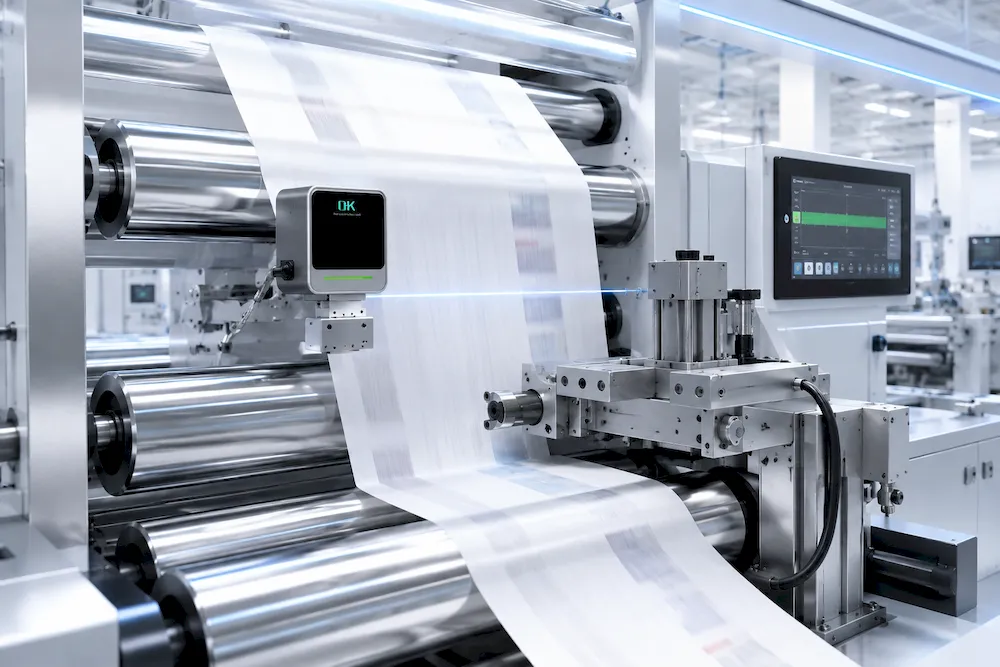
Web Guiding System Guide for Printing, Packaging and Label Converting Lines
In printing, packaging and label converting lines, the material usually moves from one roll to another roll. This moving material is called the web. It can be film, paper, labels, foil, nonwoven material or laminated material.
When the web runs through the machine, it must stay in the correct position. If the web moves left or right, many problems may happen. The printing may not be aligned. The slitting position may be wrong. The rewinding roll may not be neat. The camera inspection result may also become unstable.
A web guiding system helps keep the web in the right position. It is a very important part of roll-to-roll production. This article explains what a web guiding system is, why it is important, and how to choose a suitable system for your production line.
What Is a Web Guiding System?
A web guiding system is used to control the side position of the web. It checks the edge or line position of the material and corrects the web when it moves away from the target position.
In simple words, the system helps the material run straight.
A standard web guiding system usually includes several parts:
- A sensor
- A controller
- An actuator
- A guide frame or correction frame
- Cables and mounting parts
The sensor detects the web edge, printed line or material position. The controller receives the signal and decides whether correction is needed. The actuator moves the guide frame to bring the web back to the right position.
Why Web Guiding Is Important
In roll-to-roll production, even a small side movement can cause quality problems. The material may move only a few millimeters, but the final product may become unusable.
For printing, wrong web position can lead to poor registration or uneven printing. For packaging, it can affect lamination, coating, slitting and sealing. For label converting, it can affect die cutting, waste removal and rewinding quality.
Common Problems Without Web Guiding
Without a proper web guiding system, factories may face problems such as:
- Web edge moving left and right
- Unstable printing position
- Wrong slitting position
- Uneven rewinding roll
- Material wrinkles
- More waste during production
- More machine stops and manual adjustment
- Unstable inspection results
A good web guiding system can reduce these problems and help the line run more smoothly.
Where Is a Web Guiding System Used?
Web guiding systems are widely used in printing, packaging, coating, lamination, slitting, rewinding and label converting lines.
The system can be installed in different positions depending on the machine layout and production purpose.
Typical Application Areas
Common applications include:
- Flexible packaging printing lines
- Label printing machines
- Coating machines
- Lamination machines
- Slitting machines
- Rewinding machines
- Bag-making machines
- Film converting lines
- Paper converting lines
- Nonwoven production lines
For different machines, the guiding position may be different. Some systems are installed near the unwinding section. Some are installed before printing, before slitting, before rewinding or before another important process.
Main Parts of a Web Guiding System
To choose the right web guiding system, it is useful to understand the main parts.
Sensor
The sensor detects the position of the web. It can detect the edge of the material, a printed line, a contrast mark or another reference point.
Different materials may need different sensors. Transparent film, paper, labels and foil may not use the same sensor. If the material is transparent or reflective, the sensor choice becomes more important.
Controller
The controller is the control center of the system. It receives signals from the sensor and sends commands to the actuator.
A good controller should be easy to operate. Operators should be able to set the target position, view the current position and make simple adjustments.
Actuator
The actuator moves the guide frame or correction device. When the web moves away from the correct position, the actuator makes a correction.
The actuator must be strong enough and fast enough for the line speed and material tension.
Guide Frame
The guide frame is the mechanical part that changes the web path. It may use rollers or a frame structure to guide the material back to the correct position.
The guide frame must match the web width, machine space and material type.
How to Choose the Right Web Guiding System
Choosing a web guiding system is not only about buying a standard model. The system must match your material, machine and production process.
Before choosing a system, you should check several important points.
1. Material Type
The first thing to check is the material.
Different materials behave differently during production. Film may stretch. Paper may curl. Foil may reflect light. Labels may have gaps, printing areas or backing paper.
The material type affects the sensor choice and guiding method.
Common material types include:
- Plastic film
- Paper
- Self-adhesive labels
- Aluminum foil
- Nonwoven material
- Laminated material
If the material surface is special, it is better to send samples, photos or videos before choosing the system.
2. Web Width
Web width is also important. A narrow label web and a wide packaging film web may need different system sizes.
The guide frame, sensor position and actuator force should match the web width. If the system is too small or too weak, it may not correct the web properly.
3. Line Speed
Line speed affects response time. A high-speed machine needs a system that can detect and correct the web position quickly.
If the system response is too slow, the web may move too much before correction happens. This can still cause waste or quality problems.
4. Machine Layout
The web guiding system must fit your machine. Before installation, you need to check where the system can be mounted.
Useful machine information includes:
- Available installation space
- Web running direction
- Roller position
- Unwinding and rewinding position
- Machine frame structure
- Operator access area
Clear photos of the machine are very helpful. A short video of the web running can also help the technical team understand the problem.
5. Guiding Target
The guiding target means what the sensor should follow. It may be the material edge, a printed line, a contrast line or a label gap.
For simple materials, edge guiding may be enough. For printed materials, line guiding or contrast guiding may be needed. For labels, the system may need to detect special marks or gaps depending on the process.
Web Guiding and Print Inspection
Web guiding is closely related to print inspection.
If the web moves from side to side, the inspection camera may not see the same print area consistently. This can make inspection less accurate. It may also cause false alarms or missed defects.
A stable web makes the inspection image more stable. This helps the print inspection system work better.
For this reason, when a factory plans a print inspection project, it should also check web guiding and tension control. If the web is unstable, the inspection system alone may not solve the full problem.
Web Guiding and Tension Control
Web guiding and tension control are different, but they work together.
Web guiding controls the left and right position of the material. Tension control controls how tight the material is during movement.
If the tension is too high, the web may stretch or break. If the tension is too low, the web may wrinkle or move. Unstable tension can also make guiding harder.
For better production quality, the web should be both stable in position and stable in tension.
Information to Prepare Before Asking for a Quotation
Before asking for a web guiding system quotation, it is better to prepare clear information. This helps avoid wrong model selection.
Basic Inquiry Checklist
You can prepare the following information:
- Material type
- Web width
- Line speed
- Machine type
- Current problem description
- Photos of the machine section
- Video of the web running
- Available installation space
- Required guiding position
- Whether the material is transparent, reflective or printed
If possible, mark the place where you want to install the system on the photo. This makes communication easier.
Common Mistakes When Choosing a Web Guiding System
Some buyers only compare price or choose a system by model name. This can lead to problems later.
Mistake 1: Ignoring Material Type
Not all sensors work for all materials. A sensor that works on paper may not work well on transparent film or reflective foil.
Mistake 2: Not Checking Installation Space
Even if the system is suitable in theory, it may not fit the machine if there is not enough space.
Mistake 3: Only Solving One Problem
Sometimes web movement is caused by tension, roller alignment or machine structure. In this case, a web guiding system may help, but other machine problems should also be checked.
Mistake 4: Choosing Only by Price
A very low-cost system may not have enough accuracy, speed or stability for your production line. It is better to choose based on the real application.
Conclusion
A web guiding system is an important part of printing, packaging and label converting lines. It helps keep the material in the correct position, reduces waste and improves production stability.
To choose the right system, you need to check the material type, web width, line speed, machine layout, guiding target and installation space. You should also consider web tension and print inspection requirements.
A suitable web guiding system does not only make the web run straight. It also helps improve printing quality, slitting accuracy, rewinding quality and inspection reliability.
Before choosing a system, prepare clear machine photos, running videos and production details. This will make the recommendation more accurate and help your factory build a more stable roll-to-roll production process.